Evergreen, San Jose
Set against San Jose’s eastern foothills, Evergreen offers established neighborhoods, newer communities, parks and open space, and a broad range of homes and residential settings.
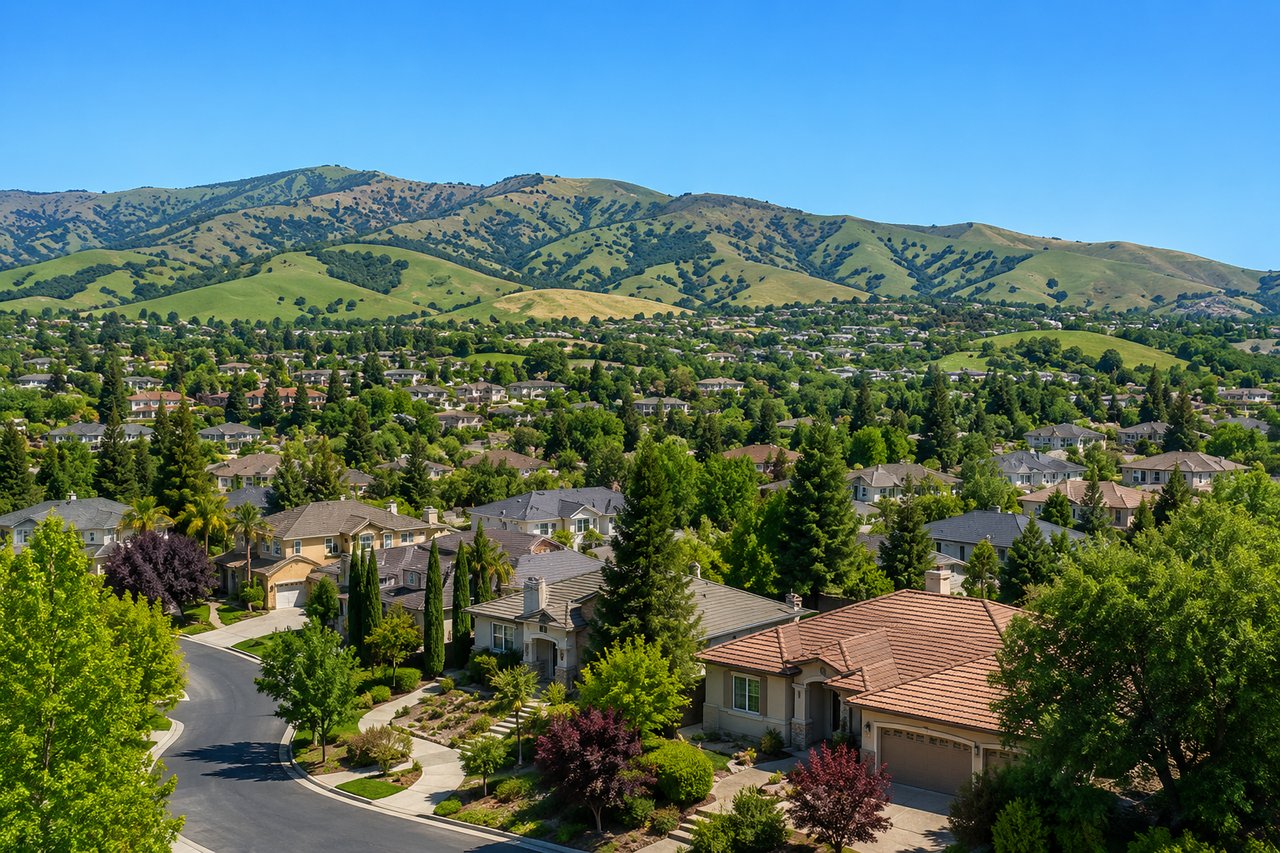
Set against San Jose’s eastern foothills, Evergreen offers established neighborhoods, newer communities, parks and open space, and a broad range of homes and residential settings.
Evergreen is one of San Jose's largest residential areas, but it's sometimes surprisingly difficult for buyers to get a clear picture of it from online searches alone.
Part of the reason is its size. Evergreen isn't a single subdivision or one type of neighborhood. It stretches from established residential streets into newer communities and larger homes closer to San Jose's eastern foothills. Depending on where you're looking, the homes, lots, views and overall feel can change considerably.
For South Bay move-up buyers, that's a big part of the appeal.
Evergreen can offer more interior space, larger lots and newer housing than buyers may find for a similar budget in some more centrally located South Bay neighborhoods, while still keeping them within San Jose.
The tradeoff is location. Getting to and from Evergreen requires more surface-street driving than in many other parts of the valley.
Understanding both sides of that equation is the key to deciding whether Evergreen belongs on your list.
Evergreen, sometimes called Evergreen Valley, sits along San Jose's eastern foothills.
The more established portions of Evergreen include residential streets around Aborn Road, San Felipe Road and surrounding areas, where buyers will find many homes built during San Jose's expansion in the 1970s and 1980s.
Move farther toward the foothills and you'll encounter newer subdivisions, larger homes and neighborhoods where elevation and views become a more noticeable part of the experience.
The broader Evergreen area also includes communities approaching Silver Creek Valley, where newer and larger homes, planned developments and HOA-managed communities become more common.
Evergreen Village Square provides a recognizable neighborhood gathering place within the community.
The important point for buyers is simple:
Don't decide whether you like Evergreen after touring one pocket.
The housing and neighborhood feel vary too much for that.
One of Evergreen's advantages is the range.
Depending on where you look, you'll find ranch-style and other single-family homes from the 1970s and 1980s, larger two-story homes built during the 1980s and 1990s, newer homes and planned communities, townhomes and condominiums, larger properties closer to the foothills, and HOA-managed communities in portions of the broader area.
That range gives move-up buyers more choices than they'll find in neighborhoods dominated by a single construction era.
It also means the questions you ask should change with the house.
With an older home, major systems, electrical and plumbing updates, HVAC, drainage, structural condition, additions and permit history can all deserve attention.
With newer homes and planned developments, HOA documents can become equally important. Reserve funding, insurance, community rules, rental restrictions, planned projects and potential assessments should be understood before buying.
For properties closer to the hills, drainage, grading, retaining walls and slope conditions may deserve additional investigation.
The goal isn't to create a longer inspection list. It's to ask the questions that make sense for the specific property you're considering.
Evergreen Village Square was designed as a neighborhood center rather than simply another shopping center. The square and surrounding area provide restaurants, services and gathering space, with the Evergreen Branch Library nearby.
It doesn't function like downtown Campbell or downtown Los Gatos, and buyers shouldn't expect it to.
But it gives surrounding neighborhoods a focal point and creates a different experience from a purely commercial strip along a major road.
For everyday shopping and services, residents also have access to retail along Aborn Road, Capitol Expressway and other nearby commercial corridors.
Evergreen remains predominantly suburban. Most errands involve a car.
For many buyers considering the area, that's an acceptable trade for a larger home, yard and residential setting.
The eastern foothills are one of Evergreen's defining features.
In many parts of the community, the hills aren't something you drive to see; they're the backdrop to everyday life.
Evergreen also provides access to parks, trails and open space in and around East San Jose. Montgomery Hill and nearby trails provide local opportunities for walking and hiking, while Joseph D. Grant County Park and other larger open-space areas are accessible farther into the eastern foothills.
For buyers who value trails, hills and a little more separation from the denser parts of Silicon Valley, that can be a meaningful part of the decision.
The broader Evergreen area includes some distinctive communities that deserve to be considered separately rather than treated as representative of all of Evergreen.
Silver Creek Valley includes larger homes and planned communities, including areas associated with Silver Creek Valley Country Club. HOA requirements, membership arrangements and amenities can vary, so buyers should verify the specifics of the property and community they're considering.
The Villages Golf & Country Club offers another very different residential option in the broader Evergreen area. It is a 55+ active-adult community with its own housing choices, amenities and community structure.
Neither Silver Creek Valley nor The Villages defines Evergreen as a whole. They illustrate just how varied the housing and lifestyle options can become within the broader area.
This is the biggest practical consideration for many Evergreen buyers.
There is no freeway running directly through the neighborhood. Depending on where you live, reaching Highway 101 or Interstate 280 generally requires traveling first on surface streets such as Capitol Expressway, Yerba Buena Road, Aborn Road or Silver Creek Valley Road.
That makes commute comparisons highly dependent on where you're going and when you're going there.
A household working in downtown San Jose or elsewhere in the South Bay may look at Evergreen very differently from someone commuting to Mountain View, Palo Alto or farther up the Peninsula several days a week.
Remote and hybrid work can make that calculation even more household-specific.
We don't think the useful conclusion is simply that Evergreen has a “bad commute.”
The better question is:
Does the additional house, yard or neighborhood you gain justify the commute your household will actually make?
Before buying, drive it yourself during the hours you expect to commute. Don't rely solely on the travel time shown on your phone during a Sunday open house.
This is why Evergreen remains compelling to many move-up buyers.
Moving farther east can change what your housing budget buys.
Depending on the particular neighborhood and current market, buyers may find opportunities for more interior square footage, larger lots, newer construction, more modern floor plans, larger garages in some neighborhoods, foothill or valley views, quieter residential settings and planned-community amenities.
That doesn't mean Evergreen is inexpensive, nor does it mean every home offers better value than one farther west.
It means the housing equation is different.
For a household that has outgrown a smaller home in Cambrian, Campbell or another central South Bay neighborhood, seeing what the same purchasing budget buys in Evergreen can be worthwhile, even if they ultimately decide the location isn't right.
School assignments should be verified for the exact property being considered.
Evergreen is geographically large, and neighborhood names, ZIP codes and school attendance boundaries don't necessarily align.
If schools are important to your search, verify the assigned schools for the specific address directly with the appropriate school district rather than relying solely on a real estate listing or neighborhood name.
Evergreen vs. Santa Teresa: Both offer established neighborhoods near foothills and opportunities for more space than some central South Bay areas. Their commute patterns, neighborhood amenities, housing and geographic relationship to the rest of the valley differ, so we wouldn't choose between them based on price alone.
Evergreen vs. Almaden Valley: Both offer foothill settings, larger homes and access to open space. Evergreen has a particularly broad range of housing ages, including significant newer construction, while individual Almaden neighborhoods have their own distinctive character and housing patterns.
Evergreen vs. Cambrian: Cambrian's more central location provides easier access to Campbell, Los Gatos and many Silicon Valley employment centers. Evergreen may provide a different combination of home size, lot and construction age for the budget.
The useful comparison isn't simply “Which neighborhood costs less?”
It's “What do I gain and what do I give up by moving from one to the other?”
Evergreen deserves a serious look if you need more space than your current home provides, want to consider larger or newer homes, prefer a suburban residential environment, value proximity to foothills and open space, and don't need a traditional walkable downtown.
It can also work particularly well when your commute is compatible with East San Jose or when a remote or hybrid schedule reduces the number of longer weekday trips.
For some buyers, Evergreen is exactly the move-up opportunity they couldn't find farther west.
If walking to restaurants, coffee and shopping is central to how you want to live, Campbell, Willow Glen or Los Gatos may deserve more attention.
If members of the household commute frequently to the Peninsula, a more centrally located community may make everyday life easier even if that means compromising on house or lot size.
And if your priority is being close to a traditional downtown rather than open space and residential neighborhoods, Evergreen may not be your first choice.
Those aren't shortcomings so much as tradeoffs.
The best neighborhood isn't the one with the longest list of advantages. It's the one whose tradeoffs fit your priorities.
As co-founders of the Warfel Gardin Group at Pulse Real Estate, Dale Warfel and Helen Gardin work directly with clients throughout the buying and selling process.
Evergreen is particularly important to evaluate neighborhood by neighborhood because the housing, setting and commute can change substantially depending on where you're looking.
We help buyers compare the specific home, street, lot, condition, construction era, HOA considerations when applicable, commute and the realistic alternatives available elsewhere in the South Bay.
For move-up buyers, we can also help evaluate the larger decision: what you're gaining from the move, what you're giving up, and whether Evergreen or another community better accomplishes your goals.
Where is Evergreen in San Jose?
Evergreen is a large residential area along the eastern and southeastern foothills of San Jose. Much of the community is centered around Aborn Road, San Felipe Road and surrounding neighborhoods, extending toward the foothills and the broader Silver Creek Valley area.
What kinds of homes are in Evergreen?
Evergreen has a particularly wide range of housing, including 1970s and 1980s single-family homes, larger homes built during the 1980s and 1990s, newer planned communities, townhomes, condominiums and larger foothill properties.
Does Evergreen have a downtown?
Not in the traditional sense. Evergreen Village Square serves as an important neighborhood center with restaurants, services and gathering space, with the Evergreen Branch Library nearby. The overall area remains suburban and primarily car-oriented.
How is the commute from Evergreen?
There is no freeway running directly through Evergreen, so residents generally travel on surface streets before reaching Highway 101 or Interstate 280. Commute time varies substantially depending on the particular neighborhood, destination and time of day. We recommend testing your actual commute before deciding on a property.
Evergreen makes the most sense when you look at the entire equation.
More room. A broad range of homes. Foothills and open space. A more suburban setting. And a location that needs to work with your actual weekday routine.
For the right household, that combination can be exactly what makes the next move possible.
And because Evergreen varies so much from one pocket to another, we wouldn't recommend deciding based on a map, or even a single afternoon of house hunting.
Explore several neighborhoods. Drive the commute. Compare what your budget buys elsewhere. Then decide which tradeoffs actually improve your life.
If you're considering a move to Evergreen, or you're thinking about selling a home here, we'd be happy to help you think through your options.
Dale Warfel & Helen Gardin
Warfel Gardin Group | Pulse Real Estate
Call or Text: 408-647-7211
mypulserealestate.com
You’ve got questions and we can’t wait to answer them.