Santa Teresa, San Jose
Set against the southern foothills of San Jose, Santa Teresa offers established neighborhoods, parks and trails, a variety of homes, and convenient access to major South Bay commute routes.
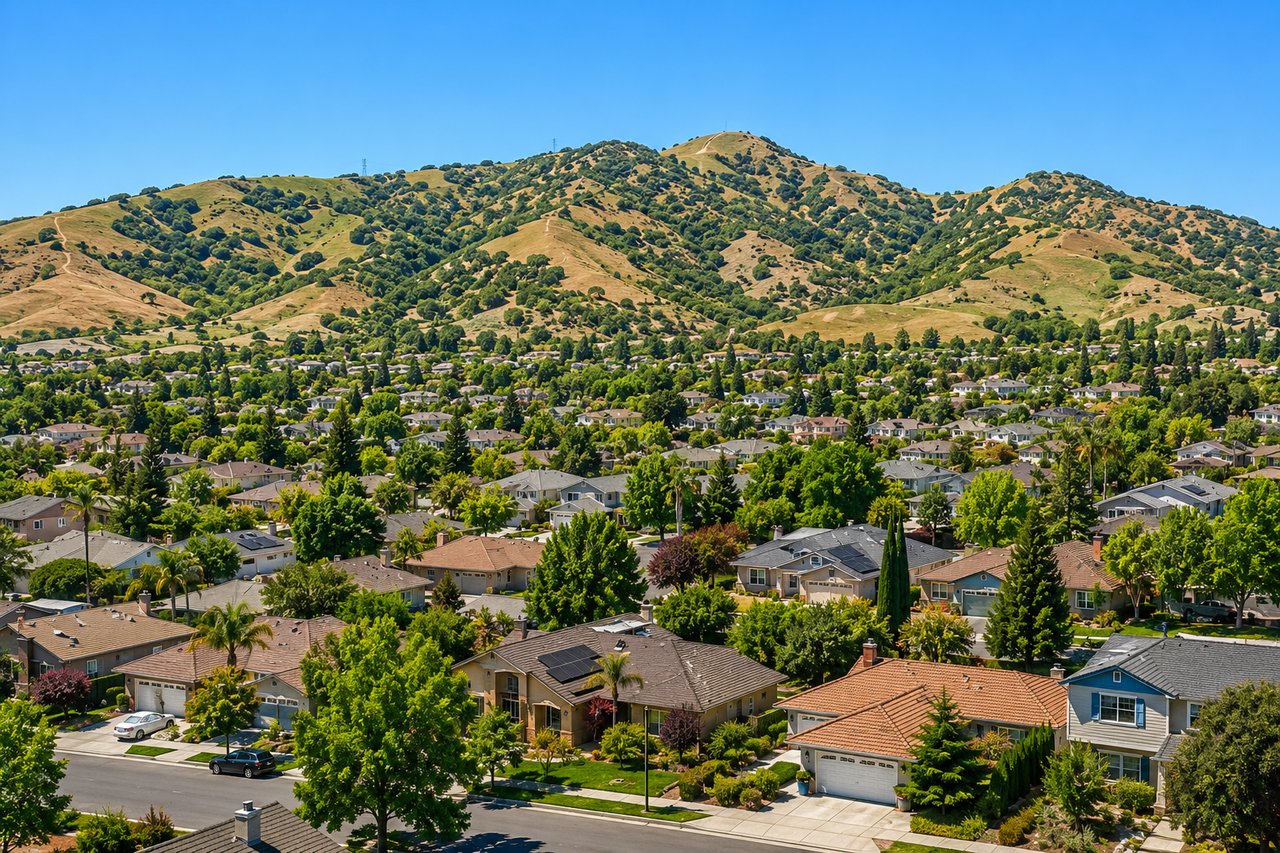
Set against the southern foothills of San Jose, Santa Teresa offers established neighborhoods, parks and trails, a variety of homes, and convenient access to major South Bay commute routes.
Santa Teresa sits along the southern edge of San Jose, where established residential neighborhoods meet the foothills. For buyers who want more house, a usable yard, access to parks and recreation, and the ability to remain in San Jose, it can be an appealing part of the South Bay to consider.
But Santa Teresa is easy to misunderstand if most of what you have seen is Santa Teresa Boulevard, Cottle Road or the view from Highway 85.
Several blocks inside, the experience can be quite different.
Rancho Santa Teresa, Los Paseos and the surrounding residential pockets have different homes, streets, amenities and community character. For buyers, understanding those differences is much more useful than simply deciding whether you “like Santa Teresa.”
For move-up buyers, Santa Teresa often enters the conversation for a simple reason: it can offer more house and yard while keeping you in San Jose, with foothills, parks and recreation close by.
That can be particularly attractive if you are moving from a condo, townhome or smaller first house and want your next move to feel like a meaningful step up.
There are trade-offs.
Santa Teresa is fundamentally suburban. Most everyday errands involve driving, and its South San Jose location can mean a longer commute if you regularly work farther north in Silicon Valley or on the Peninsula.
The useful question isn’t whether Santa Teresa is a “good” neighborhood.
It is whether the combination of space, established neighborhoods, recreation, location and price gives you more of what you are moving for without asking you to compromise on the things that matter most.
One of the most important things to understand is that Santa Teresa isn’t one uniform neighborhood.
For buyers specifically looking at Santa Teresa, 95119 and 95139 are the ZIP codes they will encounter most often. Parts of the broader South San Jose area extend into 95123, but we would not consider 95123 one of the defining ZIP codes for Santa Teresa itself.
More useful than ZIP codes, however, is understanding the individual pockets.
Rancho Santa Teresa. Rancho Santa Teresa sits close to the foothills and contains established streets of predominantly single-family homes. Mature landscaping, neighborhood parks and proximity to Santa Teresa County Park help give this part of the area a more tucked-away residential feel.
One of its defining features is the Rancho Santa Teresa Swim & Racquet Club. Roughly 750 homes fall within the club’s proprietary membership boundaries. The club includes swimming, tennis, pickleball, recreation and clubhouse facilities.
For households with children, another longstanding neighborhood tradition is the Santa Teresa Sea Otters, the club’s summer cabana swim team.
That kind of neighborhood-centered recreation is something you won’t pick up by simply looking at square footage and lot size online.
Los Paseos. Los Paseos is another established Santa Teresa pocket with its own identity and community traditions.
The Los Paseos Aquatic Club has served the neighborhood for decades and is home to the Los Paseos Penguins summer swim team. Like Rancho Santa Teresa, it creates a community connection that can matter to buyers looking for more than simply a house on a suburban street.
Other Santa Teresa Communities. Beyond Rancho Santa Teresa and Los Paseos, buyers will find additional single-family subdivisions along with townhome and condominium communities throughout the area.
That variety is why we encourage buyers to explore Santa Teresa at the street level rather than forming an opinion after seeing two or three homes.
The pockets can feel surprisingly different.
Much of Santa Teresa’s single-family housing was built during the major South San Jose expansion of the late 1960s through the 1980s.
You will find many ranch-style homes along with two-story and split-level floor plans, generally on established suburban streets. Townhomes and condominiums provide additional options for buyers who prioritize location, price or square footage differently.
If you have been looking in Blossom Valley, some of the architecture and construction eras may feel familiar.
With homes of this age, however, we pay attention to the things that can have a much bigger financial impact than countertops or flooring:
A beautifully remodeled kitchen doesn’t tell you what has, or hasn’t, been done behind the walls.
For townhomes and condominiums, the HOA documents can be just as important as the physical property. Reserve funding, recent meeting minutes, insurance, rental restrictions, planned projects and pending or recently approved special assessments all deserve careful review.
School assignments can be an important part of a Santa Teresa home search, but they need to be evaluated on a property-by-property basis.
Attendance boundaries don’t necessarily follow neighborhood names or ZIP codes, and they can change over time. Buyers should not rely solely on the school information shown in a real estate listing or on a third-party website.
For any home you are seriously considering, verify the attendance area for the exact address directly with the applicable school district.
As real estate agents, we don’t rate or rank schools or tell buyers which school is “better.” We can help identify the information available for a particular property and show you where to verify it so you can make your own decision.
Santa Teresa has better transportation options than many buyers initially realize.
Highway 85 provides the primary east-west connection, with access to Highway 101 nearby. Santa Teresa Boulevard, Cottle Road, Bernal Road and Monterey Road provide the major local routes.
Santa Teresa also has something most South Bay neighborhoods don’t: a light rail terminus.
Santa Teresa Station is the southern end of VTA’s Blue Line, providing light rail service north through San Jose. For a household where light rail works for one commute, or where one person works locally, that can materially change the transportation equation.
Buyers planning to use transit should always confirm current VTA routes, schedules and connections rather than making a purchase decision based on an old transit map.
The other consideration is geography.
Santa Teresa is in South San Jose. If you regularly commute to Mountain View, Palo Alto or farther up the Peninsula, test that commute during the hours you will actually be driving.
For someone working in South San Jose, commuting toward downtown San Jose, working remotely several days a week or using light rail, the calculation can be very different.
This is one of the areas where Santa Teresa deserves more attention than it sometimes gets.
Santa Teresa County Park rises directly behind the neighborhood, providing miles of trails and open space in the foothills. Martial Cottle Park is nearby to the north and provides another significant open-space resource in this part of San Jose.
Then there are the neighborhood recreational amenities.
Residents within the applicable membership boundaries of Rancho Santa Teresa Swim & Racquet Club have access to swimming, tennis, pickleball and clubhouse/recreation facilities. The club has been part of the community since the 1960s, and its Sea Otters cabana swim team is a longstanding summer tradition.
Los Paseos Aquatic Club provides another neighborhood institution and summer swim tradition in Los Paseos.
And on Bernal Road, Santa Teresa Golf Club provides a public golf course at the base of the foothills.
Put those together with the parks and trails and Santa Teresa has a stronger recreational identity than you might assume from driving down Santa Teresa Boulevard.
Most everyday errands are relatively easy.
Shopping and services are concentrated along Santa Teresa Boulevard and Cottle Road, with neighborhood centers and larger retail areas serving South San Jose.
But Santa Teresa is fundamentally a suburban, drive-to-errands community.
If your ideal Saturday involves walking from home to coffee, dinner and shops along a traditional downtown or main street, Santa Teresa probably isn’t going to give you what Campbell or Willow Glen does.
That isn’t necessarily a negative. It is simply a different lifestyle trade-off.
Many buyers considering Santa Teresa are prioritizing a yard, interior space, quieter residential streets, recreation and access to the foothills over walkability to restaurants.
Many move-up buyers considering Santa Teresa are also looking in Blossom Valley, Cambrian or Almaden Valley.
All of them can appear in the same home search, but they don’t necessarily offer the same living experience.
Blossom Valley has considerable overlap with Santa Teresa in housing era and suburban character. Santa Teresa generally feels more connected to the foothills and has distinctive pockets such as Rancho Santa Teresa and Los Paseos with longstanding recreational clubs and traditions.
Cambrian puts buyers farther north and closer to Campbell, Los Gatos and many Silicon Valley employment centers. Santa Teresa may offer a different house-and-lot equation for the same budget.
Almaden Valley also has a strong connection to the foothills and open space, but it is a different market with different homes, neighborhood character and price points. Buyers shouldn’t assume Santa Teresa is simply a less-expensive version of Almaden.
The right comparison depends on what you are actually trying to improve from your current home.
Don’t make the decision based solely on price per square foot. Commute, property condition, neighborhood amenities, recreation and how you expect to live in the home all matter.
Santa Teresa deserves a serious look from buyers who:
It can be particularly interesting for households that value the kind of community traditions found around Rancho Santa Teresa and Los Paseos.
Santa Teresa isn’t the right answer for everyone.
If walkability to restaurants, coffee shops and a traditional downtown is high on your list, Campbell or Willow Glen may fit better.
If your commute takes you to the Peninsula five days a week, you may decide that living farther north is worth giving up some house or yard.
If you want predominantly newer construction, Santa Teresa’s established homes may not be what you are looking for.
And if you are comparing Santa Teresa with Almaden Valley, Cambrian, Blossom Valley or Evergreen, the neighborhood name alone won’t answer the question.
Different communities offer different combinations of location, housing, recreation and everyday lifestyle.
The goal is to figure out which compromises you would rather live with.
Choosing a neighborhood usually becomes easier once you stop comparing names on a map and start comparing actual homes and the life you would have in them.
That is where we can help.
Dale Warfel and Helen Gardin help buyers compare the different pockets of Santa Teresa, recent comparable sales, property condition, disclosures, HOA documents when applicable, improvement needs, commute considerations and what the same budget might buy in competing South Bay neighborhoods.
For move-up buyers, we can also help work through the financial side of the move: what you may net from your existing home, whether selling before buying makes more sense, how much financial flexibility you want after closing, and whether a home that needs updating still makes sense once the likely improvements are considered.
Our goal isn’t to convince you to buy in Santa Teresa.
It is to help you determine whether Santa Teresa gives you more of what you are moving for.
Where exactly is Santa Teresa in San Jose?
Santa Teresa is in South San Jose, generally centered around the Santa Teresa Boulevard corridor and extending toward the foothills. For buyers specifically searching Santa Teresa, 95119 and 95139 are the ZIP codes most commonly associated with the neighborhood.
What kinds of homes are in Santa Teresa?
You will find predominantly established single-family homes dating from the late 1960s through the 1980s, including ranch, two-story and split-level designs, along with a variety of townhome and condominium communities.
Does Santa Teresa have neighborhood swim clubs?
Yes. Rancho Santa Teresa Swim & Racquet Club is a significant neighborhood amenity and is home to the Santa Teresa Sea Otters summer cabana swim team. Los Paseos has its own longstanding aquatic club and the Los Paseos Penguins summer swim team.
Club membership and eligibility depend on the particular property and club boundaries, so buyers should verify eligibility for a specific address rather than assuming every Santa Teresa home has access.
Does Santa Teresa have light rail?
Yes. Santa Teresa Station is the southern terminus of VTA’s Blue Line. Buyers who expect to use light rail should verify current routes, schedules and connections directly with VTA.
Santa Teresa is easy to underestimate if all you have seen is the commercial corridor.
Get into Rancho Santa Teresa, Los Paseos and the residential streets closer to the foothills and you begin to see why buyers who want more space, established neighborhoods, recreation and access to open space without leaving San Jose keep it on their list.
The question isn’t whether Santa Teresa is a “good neighborhood.” That is too broad to be useful.
The better question is:
Does the right pocket of Santa Teresa give you more of what you’re moving for without asking you to compromise on the things that matter most?
Spend some time in the different neighborhoods. Test your commute. Compare actual homes in Santa Teresa with what the same budget buys in Cambrian, Blossom Valley and Almaden Valley.
Then decide which trade-offs make the most sense for you.
If you’re considering buying or selling a home in Santa Teresa, Dale Warfel and Helen Gardin would be happy to talk through the neighborhoods, market conditions and options with you.
Dale Warfel & Helen Gardin
Warfel Gardin Group | Pulse Real Estate
408-647-7211
You’ve got questions and we can’t wait to answer them.