Sell First or Buy First in Silicon Valley? A Clear Guide for Move-Up Owners

You have outgrown your first home, and a bigger one across the South Bay is calling. Then the real question lands: do you sell first or buy first? For move-up owners in Silicon Valley, the order you choose shapes your budget, your timeline, and how much risk you carry along the way. Supply is still tight, with roughly three weeks of single-family inventory in Santa Clara County, and prices are steady rather than soaring. That backdrop makes sequencing the whole game. This guide walks the three practical paths, the trade-offs of each, and a simple way to decide, so your next move has a clear beginning, middle, and end.
Before you choose a path, you need to know what you are actually working with. Your usable equity is three numbers: your home's current market value from recent closed comps, your remaining loan balance, and your estimated net after selling costs. That last number, what actually lands in your account, is the one that funds your next down payment.
Skip the automated estimates. A Zillow "Zestimate" and your county tax assessment are both rough proxies, and in a market like Cambrian or Campbell they can be off by six figures. A closed-comp analysis of homes like yours, sold in the last few months, is the realistic starting point. Once you know your real net, the sell-first versus buy-first question gets a lot less abstract.
There are three ways move-up owners handle buying and selling at the same time in San Jose and across the South Bay. Each one trades risk for convenience differently.
1. Sell first, then buy (often with a rent-back). You list and close on your current home, negotiate a short rent-back so you are not homeless for a weekend, and then shop with cash in hand. Your offer is clean and non-contingent, which is exactly what wins in tight supply. The trade-off is timing pressure once your home closes, though a rent-back of a few weeks usually softens it. For most households, this is the default.
2. Buy first, then sell (bridge loan or HELOC). You secure your next home before selling, using a bridge loan or a home equity line to cover the down payment. This buys you the luxury of one move and no rushed decisions. The trade-off is cost and exposure: bridge financing is short-term and not cheap, and you carry two sets of payments until your first home sells. It fits owners with strong liquidity or reliable equity events.
3. Buy with a contingent offer. You write an offer on your next home contingent on selling your current one. It is the lightest on cash, but the weakest in a competitive market. When a seller compares a clean offer to a contingent offer, the clean one usually wins. This path works best on homes that have been sitting or with a flexible seller.
The right answer is personal, and it comes down to two things: your finances and your comfort with risk. Ask yourself a few plain questions. Can you qualify to carry two mortgages, even briefly? Do you have cash reserves or a coming equity event that a bridge loan could lean on? How would you feel selling before you have found the next home, versus owning two homes for a stretch?
If certainty matters most, sell first and rent back. If a smooth, single move matters most and the numbers support it, buy first with a bridge. If you are early in the process and simply testing the water, a contingent offer keeps you flexible, as long as you know it may not win the home you love. There is no universally "smart" order, only the one that fits your situation.
This is the kind of decision where working directly with both Dale and Helen matters most. Dale Warfel and Helen Gardin start every move-up conversation with the equity math, run the closed-comp value read themselves, and map your three paths against your actual finances and timeline. Because both advisors work every client together, one can manage the sale while the other lines up the purchase, so the two sides of a move-up never fall out of sync. Across 425+ home sales and more than $365M in volume, they have sequenced this exact puzzle many times. For the mechanics of getting a home ready, see our guide to preparing your home to sell, and our seller resources and buyer resources for the full picture.
Q: Can I rent back my home after selling it?
Often, yes. A rent-back (also called a seller lease-back) lets you stay in your home for a set period after closing while you complete your purchase. In tight markets, offering a rent-back can even make your home more attractive to buyers who are not in a rush.
Q: How much does a bridge loan cost?
Bridge loans are short-term and priced above standard mortgage rates, usually interest-only, and they assume your current home sells within the loan term. The math works best when you have real equity and a clear path to selling. We walk clients through the numbers before they commit.
Q: What if I buy first and my home takes longer to sell?
That is the main risk of buying first. You could carry two sets of payments longer than planned. A realistic pricing and prep plan for your current home, built before you buy, is how you keep that window short.
Q: Do I have to decide the order right now?
No. The best first step is a value read and a look at your financing options. Once you see your real equity and what you can carry, the order usually becomes obvious.
Deciding to sell first or buy first is not about a formula. It is about matching the path to your equity, your financing, and how you want this chapter of your life to feel. If you are considering a move-up in San Jose, Cambrian, Campbell, or anywhere across the South Bay, Dale and Helen would love to help you think it through. Call or text us at 408-647-7211. Clear Guidance. Smart Decisions. Exceptional Results.
About Pulse Real Estate:
Pulse Real Estate (The Warfel Gardin Group) is the Silicon Valley residential team where every client works directly with both Dale Warfel and Helen Gardin, from the first conversation to the day the keys change hands. Personal attention does not mean limited resources: they coordinate a full bench of trusted specialists, including lenders, contractors, inspectors, stagers, and escrow. With decades of combined South Bay experience, 425+ home sales, 160+ five-star reviews, and more than $365M in sales volume, Dale and Helen help buyers, sellers, and trustees move forward with clarity and confidence. Visit mypulserealestate.com or call 408-647-7211.
Posted by Dale Warfel and Helen Gardin, The Warfel Gardin Group at Pulse Real Estate.
Stay up to date on the latest real estate trends.

Home Selling

Home Buying

A practical guide to navigating family decisions, preparing the home for sale, and protecting your parent's financial interests.
Home Buying
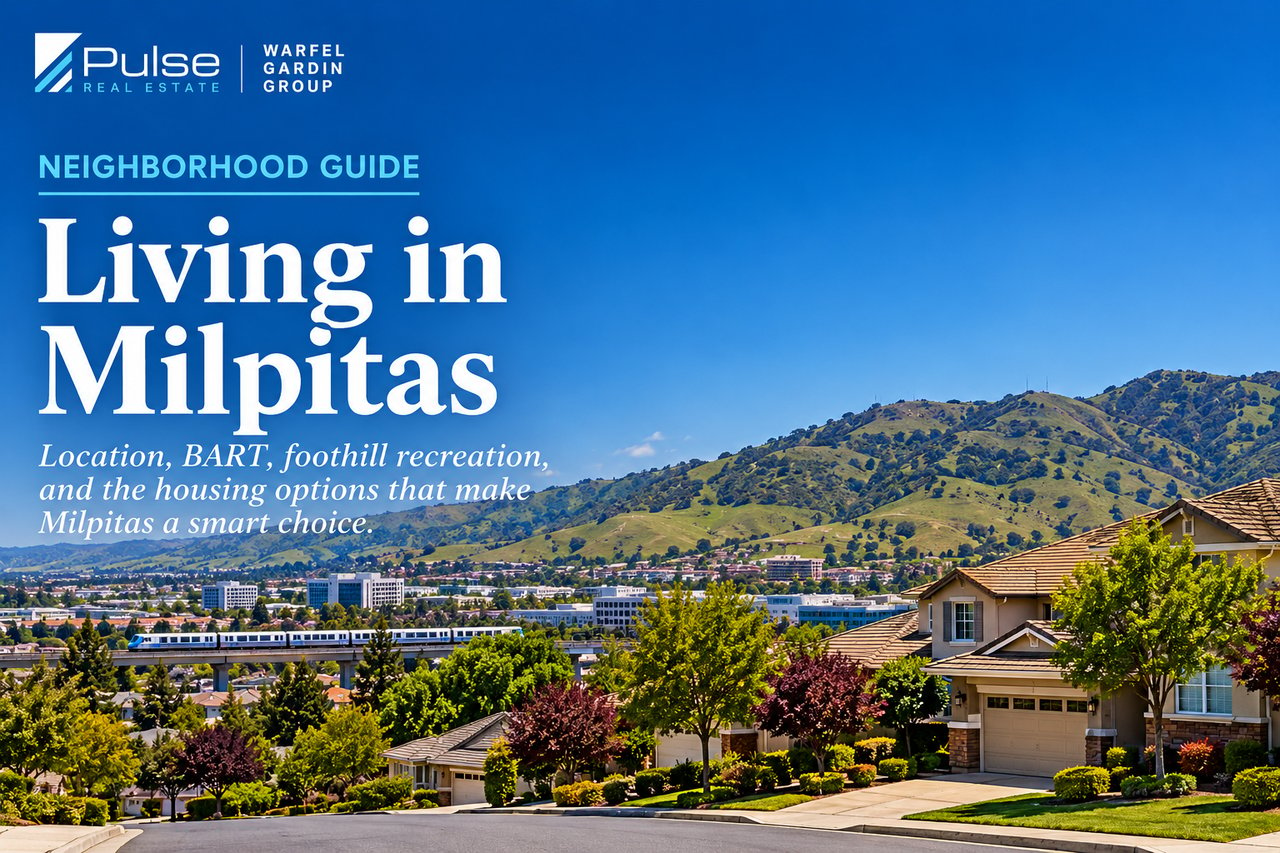
Homes, neighborhoods, BART, Silicon Valley access, foothill recreation, and what buyers should know before choosing Milpitas
You’ve got questions and we can’t wait to answer them.