Silicon Valley Housing Market Fall 2026
Home Buying

Home Buying
The Silicon Valley housing market is giving buyers and sellers some mixed signals as we head into fall.
There are more homes available than there were a year ago. Sales activity has slowed. Mortgage rates are hovering near 7%. Yet many well-positioned homes are still selling quickly and, in some cases, above their asking prices.
So is this becoming a buyer’s market?
Not exactly.
Is it still a strong seller’s market?
That answer depends increasingly on the home, the neighborhood, the price and how the property is presented.
The better way to describe the fall 2026 Silicon Valley housing market may be this:
It’s becoming a more selective market.
And that distinction matters whether you’re thinking about buying or selling a home.
One of the biggest changes in the local market is inventory.
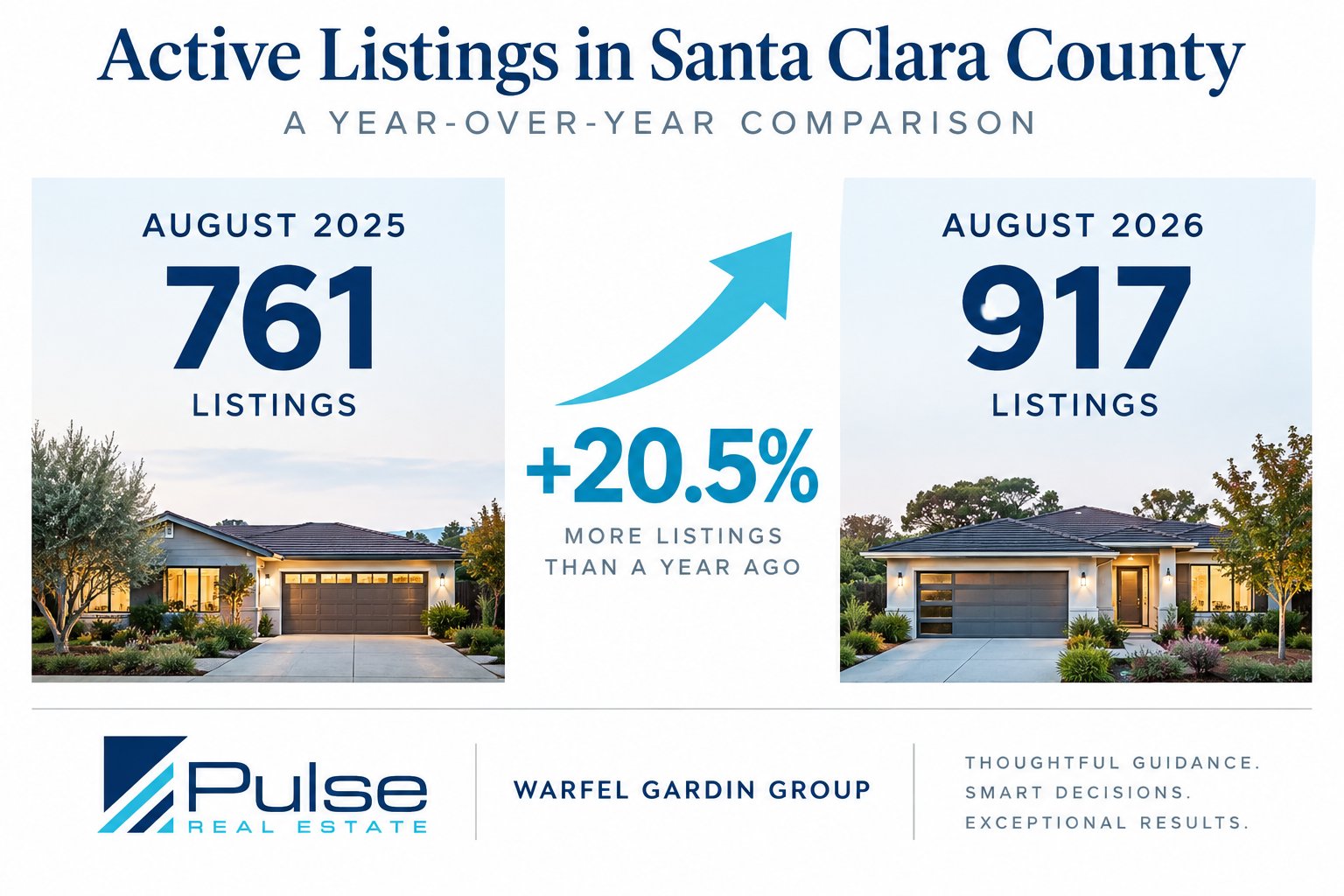
For single-family homes across Santa Clara County, August ended with 917 active listings, about 20.5% more than a year earlier. That represented approximately 48 days of inventory, compared with 35 days a year ago.
That’s meaningful.
More inventory gives buyers something they haven’t always had in Silicon Valley: choices.
Instead of feeling like they have to pursue the first acceptable home that becomes available, buyers may be able to compare several properties, evaluate condition more carefully and be more selective about location and price.
But more inventory does not mean good homes have suddenly become easy to buy.
Redfin reports that 49.7% of Santa Clara County homes sold above their list price in August, and the countywide sale-to-list ratio was approximately 102%.
In other words, nearly half of the homes sold still received a price above asking.
That's why broad descriptions like “buyer’s market” and “seller’s market” can be misleading in Silicon Valley.
In a highly competitive market, buyers sometimes have to compromise simply because there are so few alternatives.
A different dynamic begins to emerge as inventory increases.
Imagine two similar homes come on the market in the same general area.
One has been thoughtfully prepared, has completed inspections available, shows well, is priced appropriately and makes it easy for buyers to understand what they’re purchasing.
The other needs work, has limited information available and enters the market at an ambitious price.
When buyers have more choices, the difference between those two properties becomes much more important.
That can produce what appears to be a contradictory market: one home receives multiple offers while another nearby home sits on the market or reduces its price.
For sellers, understanding that distinction may be more useful than trying to determine whether the overall market is “up” or “down.”
August data also points to some moderation in prices.
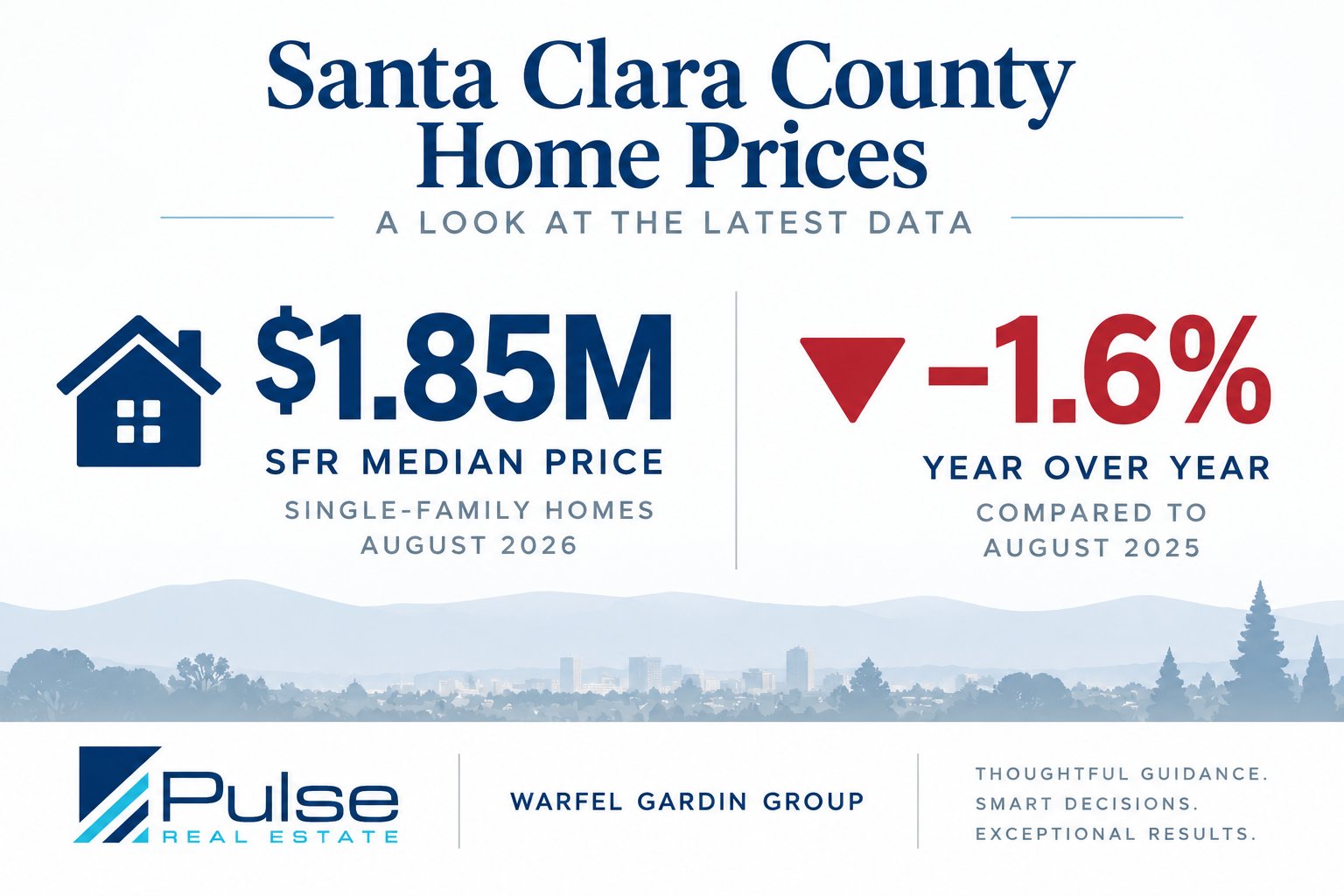
The Santa Clara County Association of REALTORS® reported an August median price of $1.85 million for single-family homes, down 1.6% from August 2025 and 2.6% from July. Single-family home sales were down 13.6% year over year.
Different data providers use different property types and methodologies, so their numbers vary. Redfin, which includes all home types in its countywide figures, reported a median sale price of approximately $1.535 million, down 2.2% year over year.
The important takeaway isn't any one number.
It's that buyers and sellers shouldn't assume that the rapid appreciation of previous markets will automatically carry a property to a higher price.
For sellers, pricing and preparation become increasingly important when buyers have alternatives.
For buyers, modestly softer countywide pricing doesn't necessarily mean the particular house you want will sell at a discount.
Financing remains one of the biggest challenges.
As of September 17, Freddie Mac reported that the average 30-year fixed mortgage rate was 6.95%, up from 6.76% the previous week and 6.26% one year earlier.
Higher rates affect purchasing power and monthly payments. They can also affect buyer behavior.
Some buyers respond by lowering their price range. Others postpone buying altogether.
But there is another side to that equation.
When some buyers step away, the buyers who remain may face less competition.
That doesn't make higher interest rates a good thing. It simply means that the interest rate is only one part of a home-buying decision.
A buyer should also consider the price of the property, the level of competition, the terms required to win the home and how long they expect to own it.
Waiting for rates to fall can have its own trade-offs. If lower rates eventually bring more buyers back into the market, competition could change as well.
Rather than trying to predict mortgage rates, we believe buyers are better served by understanding what they can comfortably afford today and what opportunities today's market may offer them.
For buyers who are financially prepared to purchase, this market may provide something valuable: time to be more thoughtful.
Not with every property, of course. An attractive home in a desirable Silicon Valley neighborhood can still move quickly.
But compared with an extremely inventory-constrained market, buyers may have more opportunities to investigate the property before making a decision.
That means looking beyond the staging and finishes.
How old is the roof?
Have major improvements been permitted?
Has the property been repiped or rewired?
What do the pest, roof and property inspections reveal?
Is homeowner's insurance readily available for that particular address?
Are there additions, converted garages or accessory structures, and are they permitted?
Those questions become particularly important when you're comparing several homes rather than simply competing to get one.
For sellers, the changing market doesn't mean buyers have disappeared.
It means buyers may be less forgiving.
When buyers have several properties to choose from, preparation becomes part of the pricing strategy.
That doesn't mean every seller should remodel a kitchen, replace every aging component or spend heavily before putting a home on the market.
Quite the opposite.
The goal should be to identify the improvements that are likely to affect buyer perception or marketability — and distinguish them from projects that are unlikely to provide an adequate return.
Sometimes paint, lighting, landscaping or repairs make sense.
Sometimes they don't.
Pre-market inspections can also help identify issues before buyers discover them during escrow. The seller can then decide whether to repair something, disclose it and price accordingly, or leave it for the buyer.
The important part is making those decisions before you spend, rather than assuming every improvement will increase the sale price.
This may be the most important point of all.
Silicon Valley isn't one housing market.
A home in Palo Alto may behave very differently from one in Morgan Hill. The buyer pool for a Los Gatos property can differ significantly from the buyer pool for a home in Santa Teresa. Cambrian, Willow Glen, Sunnyvale, Evergreen, Almaden Valley and Saratoga each have their own housing stock, price points and buyer expectations.
Even within the same community, school boundaries, lot size, street location, condition and floor plan can create substantial differences.
That's why countywide statistics are useful for understanding direction, but they're much less useful for determining what a particular home is worth or how competitive a buyer should be for a particular property.
Local market data needs local context.
There isn't one answer that applies to everyone.
If the monthly payment isn't comfortable, buying simply because there may be less competition doesn't make sense.
But buyers who are financially prepared shouldn't automatically assume that waiting for lower mortgage rates will produce a better buying opportunity.
Today's combination of higher financing costs and increased inventory may provide negotiating opportunities that disappear if borrowing costs fall and more buyers return.
The right question isn't simply:
“Are mortgage rates too high?”
It's:
“Given my finances, my timeline and the homes available today, does buying now make sense for me?”
That's a much more useful conversation.
The same principle applies to sellers.
Trying to identify the perfect month to sell is difficult because several variables can move at once: interest rates, inventory, buyer demand, the economy and the number of competing homes in your particular neighborhood.
Instead, sellers should begin with their own goals.
Where are you moving?
When do you want to be there?
Does your home need preparation?
Would improvements meaningfully affect the sale?
What properties would compete with yours if you listed today?
And what does the current buyer pool look like for a home like yours?
For homeowners considering a sale in early 2027, fall 2026 is not too early to start answering those questions.
Planning early gives you something every seller benefits from: options.
The Silicon Valley housing market isn't simply getting better for buyers or worse for sellers.
It's becoming more selective.
Buyers have more choices in parts of the market, but desirable homes can still generate strong competition. Sellers can still achieve excellent results, but pricing, preparation and positioning matter more when buyers have alternatives.
For both sides, this is a market that rewards preparation over prediction.
If you're considering buying or selling a home in Silicon Valley, Dale Warfel and Helen Gardin can help you understand what the current market means for your particular situation.
Warfel Gardin Group | Pulse Real Estate


Stay up to date on the latest real estate trends.
Home Buying
What Buyers and Sellers Should Know

Home Buying
Neighborhoods, homes, schools, commute considerations, and what buyers should know before choosing Palo Alto

Home Buying
Larger properties, established neighborhoods, Saratoga Village, foothill living, and what buyers should know before choosing Saratoga

Home Buying
Foothill neighborhoods, more room to move up, and what buyers should know about life in East San Jose
You’ve got questions and we can’t wait to answer them.