Living in Sunnyvale: A Neighborhood Guide for Home Buyers
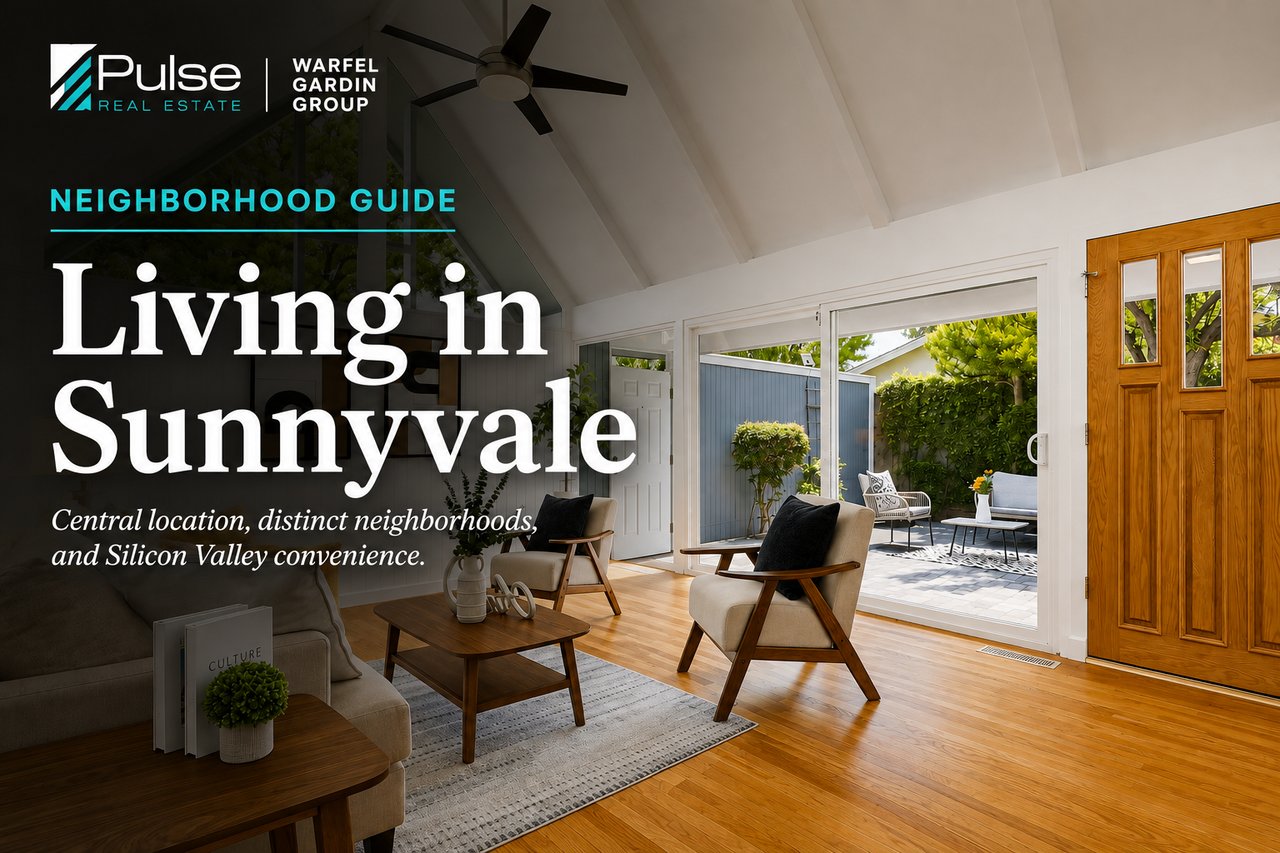
Central Silicon Valley location, distinct neighborhoods, downtown growth, and what buyers should know before choosing Sunnyvale
Few Silicon Valley cities combine location and residential variety quite like Sunnyvale.
It sits between Mountain View, Cupertino, Santa Clara and San Jose, putting much of Silicon Valley within relatively easy reach. But Sunnyvale is more than a convenient place on the map.
Move through the city and you'll find established ranch-home neighborhoods, mid-century architecture, Eichler homes, newer townhome communities, neighborhoods influenced heavily by school boundaries, and a downtown that has changed considerably in recent years.
That's what makes Sunnyvale interesting for move-up buyers.
You're not simply deciding whether to live in Sunnyvale. You're deciding which part of Sunnyvale gives you the combination of home, location, commute and lifestyle you're looking for.
Sunnyvale occupies an unusually central position in Silicon Valley.
Highways 101, 237 and 85, along with Central Expressway, provide access in multiple directions. Caltrain serves downtown Sunnyvale, and many major employment centers are relatively close.
For households with two people commuting to different parts of Silicon Valley, that location can be especially valuable.
But commute convenience varies considerably within the city.
A home in north Sunnyvale near Highway 237 creates a different daily routine from one in Cherry Chase near the Mountain View border or southwest Sunnyvale near Cupertino.
That's why we recommend testing the commute from the actual property, rather than assuming that every Sunnyvale address offers the same advantage.
One of Sunnyvale's strengths is that buyers have several distinctly different residential environments to choose from.
Cherry Chase is one of Sunnyvale's best-known residential areas.
The neighborhood is characterized largely by established single-family homes, mature landscaping and residential streets, with convenient access toward Mountain View and Cupertino.
For move-up buyers, this part of Sunnyvale frequently enters the conversation when location, a traditional single-family neighborhood and school assignments are important considerations.
Demand can vary substantially even within this area, so the specific street, lot, condition and school attendance boundaries matter.
Birdland is especially interesting for buyers who appreciate mid-century architecture.
The neighborhood includes classic ranch homes along with homes associated with the Eichler era and other mid-century designs.
That architectural character gives Birdland an identity that's different from many other Sunnyvale neighborhoods.
When considering an older or mid-century home, however, it's important to look beyond the design.
Electrical systems, plumbing, roofing, HVAC, foundations, drainage, windows and previous remodeling all deserve careful attention. With remodeled homes, permit history can also be important.
The neighborhoods around Ortega Park offer another established residential option in southwest Sunnyvale.
You'll find single-family homes, mature neighborhoods and convenient access toward Cupertino, with parks, shopping and major Silicon Valley employment areas within reasonable reach.
As elsewhere in Sunnyvale, buyers should evaluate these homes individually rather than relying too heavily on the neighborhood name. Lot size, remodeling, street location and school assignment can all materially affect the buying decision.
North Sunnyvale feels noticeably different from southwest Sunnyvale.
Lakewood and surrounding neighborhoods provide convenient access to Highway 101, Highway 237 and employment centers throughout the northern part of Silicon Valley.
Housing includes established single-family neighborhoods as well as townhomes and newer development in the broader north Sunnyvale area.
For some buyers, north Sunnyvale can provide a different house-for-the-budget equation than neighborhoods farther south.
The trade-off is simply that the neighborhood environment, schools, housing stock and commute patterns are different.
It's worth comparing rather than assuming one part of Sunnyvale represents the entire city.
Downtown Sunnyvale has become an increasingly important part of the city's identity.
Historic Murphy Avenue provides restaurants, coffee shops and local businesses, while newer development surrounding the downtown area has added housing, shopping and additional dining.
The Sunnyvale Caltrain station is also located downtown.
For buyers who want to combine a Silicon Valley commute with the ability to walk to restaurants, coffee or community events, this part of Sunnyvale deserves consideration.
Housing near downtown includes older single-family neighborhoods as well as condominiums, townhomes and newer higher-density development.
That creates a very different lifestyle from the single-family neighborhoods farther south or west.
Sunnyvale's housing stock is more varied than buyers sometimes expect.
Depending on the neighborhood, you'll encounter:
For older homes, pay particular attention to major systems and previous remodeling.
A beautifully renovated kitchen doesn't tell you when the electrical panel was replaced, whether an addition was permitted or what's happening underneath the house.
For townhomes and condominiums, the HOA deserves its own review, including reserves, insurance, meeting minutes, rental restrictions, planned projects and potential assessments.
Sunnyvale is served by multiple school districts, and attendance boundaries don't line up neatly with city or ZIP-code boundaries.
That's important because two nearby homes can have different assigned schools.
Some Sunnyvale addresses are served by districts that also serve portions of Cupertino, Mountain View, Santa Clara or surrounding communities.
For buyers who consider schools important, that can materially influence which properties they pursue.
But we wouldn't describe Sunnyvale broadly as having “top-rated schools,” nor would we rely solely on school information displayed in a real estate listing.
Verify the current attendance assignment for the exact property directly with the appropriate school district.
School boundaries and programs can change, and the address, not simply “Sunnyvale”, is what matters.
Sunnyvale has an extensive system of neighborhood parks and recreational facilities distributed throughout the city.
Depending on where you live, everyday recreation may mean walking to a neighborhood park, biking on local routes and trails, using community recreation facilities or heading toward the Baylands.
Baylands Park gives Sunnyvale a recreational environment that feels very different from its residential neighborhoods, with access to the open landscape along the southern San Francisco Bay.
That variety is another reason location within Sunnyvale matters.
Someone living near downtown, someone in Cherry Chase and someone in north Sunnyvale may all have a Sunnyvale address while experiencing the city quite differently.
A citywide median price doesn't tell a Sunnyvale buyer very much.
Values can change considerably based on:
That's why we prefer comparing a property with the most relevant recent sales, rather than relying on a citywide average.
For a move-up buyer, the more useful question is:
What are you trying to gain from the move, and which Sunnyvale neighborhood gives you the best combination of those things?
More bedrooms?
A larger yard?
A shorter commute?
A particular school assignment?
Walkability?
Architectural character?
Those priorities can point you toward very different parts of the city.
These comparisons can be particularly useful.
Sunnyvale vs. Santa Clara:
Both offer central Silicon Valley locations and varied housing. Santa Clara has its own municipal advantages and different neighborhood patterns, while Sunnyvale's geography puts some neighborhoods particularly close to Mountain View and Cupertino.
Sunnyvale vs. Cupertino:
Buyers frequently compare southwest Sunnyvale with Cupertino, particularly when schools and commute are important. The right answer often comes down to the specific house, attendance boundaries and what you're willing to trade for location.
Sunnyvale vs. Mountain View:
Both provide strong access to Silicon Valley employment centers and Caltrain. Mountain View has its own downtown and neighborhood character, while Sunnyvale offers a broader range of residential environments across a larger city.
Sunnyvale vs. Campbell:
Campbell offers a distinctive historic downtown, the Pruneyard and established residential neighborhoods. Sunnyvale may work better for buyers prioritizing access toward Mountain View, Cupertino and the northern Silicon Valley employment corridor.
There isn't one universally better choice.
The goal is to identify which community makes the most sense for the way you actually live.
Sunnyvale deserves serious consideration from buyers who:
Its biggest strength may simply be optionality.
There are several different ways to live in Sunnyvale.
Sunnyvale may be less compelling if your priority is a foothill setting, expansive views or immediate access to large open-space preserves.
For those priorities, Los Gatos, Almaden Valley, Evergreen or Santa Teresa may be worth comparing.
Buyers primarily trying to maximize house and lot size for their budget may also find stronger alternatives farther south.
And buyers looking for a more traditional small-town environment may prefer communities such as Los Gatos, Campbell or Morgan Hill.
Those comparisons aren't criticisms of Sunnyvale.
They help clarify what you're actually trying to accomplish with your move.
Q: What is Sunnyvale known for?
Sunnyvale is known for its central Silicon Valley location, established residential neighborhoods, technology employment base, downtown and Murphy Avenue, Caltrain access, parks and proximity to communities including Mountain View, Cupertino and Santa Clara.
Q: Does Sunnyvale have a downtown?
Yes. Downtown Sunnyvale is centered around historic Murphy Avenue and the surrounding district, with restaurants, shops, newer development and the Sunnyvale Caltrain station.
Q: What kinds of homes are in Sunnyvale?
Sunnyvale has a broad housing mix including mid-century ranch homes, Eichlers and other modernist homes, remodeled and expanded houses, newer construction, townhomes, condominiums and higher-density development.
Q: Is Sunnyvale good for commuting?
Its central location and access to Highways 101, 237 and 85, Central Expressway and Caltrain can make Sunnyvale convenient for many Silicon Valley commutes. Actual travel time varies considerably by neighborhood and destination, so test the commute from the specific property.
Q: Which Sunnyvale neighborhood is best?
There isn't one best neighborhood. Cherry Chase, Birdland, Ortega, Lakewood, downtown and other areas offer different combinations of housing, schools, commute, walkability and price.
Q: How do I verify schools for a Sunnyvale home?
Check the exact address directly with the appropriate school district. Don't assume a Sunnyvale address, ZIP code or online real estate listing determines the school assignment.
Sunnyvale's appeal isn't built around one defining feature.
It's the combination.
Central location. Established neighborhoods. Different housing choices. Downtown and Caltrain. Parks and recreation. And convenient access to much of Silicon Valley.
The question is which part of Sunnyvale gives you the right combination for your move.
That's where comparing neighborhoods, and sometimes individual streets, becomes much more useful than simply searching by city.
If you're considering buying or selling in Sunnyvale, Dale Warfel and Helen Gardin would love to help. Call or text us at 408-647-7211. You can also explore our South Bay community guides and buyer FAQ to compare Sunnyvale with the other communities you're considering.
Clear Guidance. Smart Decisions. Exceptional Results.
About Pulse Real Estate:
Pulse Real Estate (The Warfel Gardin Group) is the Silicon Valley residential team where you work directly with both Dale Warfel and Helen Gardin. With 425+ home sales, 160+ five-star reviews, and more than $365M in Silicon Valley sales volume, Dale and Helen are advisors first: they help buyers and sellers make better decisions across the South Bay. Learn more at mypulserealestate.com or call 408-647-7211.
Posted by Dale Warfel and Helen Gardin, The Warfel Gardin Group at Pulse Real Estate.
Stay up to date on the latest real estate trends.

Home Selling

Home Buying

A practical guide to navigating family decisions, preparing the home for sale, and protecting your parent's financial interests.
Home Buying
Homes, neighborhoods, BART, Silicon Valley access, foothill recreation, and what buyers should know before choosing Milpitas
You’ve got questions and we can’t wait to answer them.